


Boston technology companies employ 14.7% of all workers in the city and represent 17.8% of all local businesses. This is partially because Boston is home to the headquarters of some major global technology enterprises. It’s also because Boston’s tech sector is using growth-focused IT strategies to the fullest.
|
“You don’t have to be a major tech company to grow your business like one. There are certain IT strategies that you can implement that will help you drive results.” - Keith Bamford, CEO, Daystar |
Even though they’re only 14.7% of the workforce in Boston, Massachusetts, tech workers contribute an average of 25% more to the state's economy than non-tech workers. This isn’t just because of the rapid growth of the sector itself; it’s also largely because these workers are often finding creative ways to enhance efficiency.
You don’t have to be left behind. This article will take a look at some of the top tech companies in Boston, and then we will show you some key growth-driving IT strategies that you can apply to your own organization.
5 of The Biggest Tech Companies in Boston, Massachusetts
1. Akamai Technologies
Akamai Connected Cloud places computing resources closer to users through a large global edge network, which helps reduce delays compared to centralized data centers. Streaming platforms, online retailers, and public sector organizations utilize Akamai’s tools to enhance performance, manage traffic, and stay secure against DDoS attacks.
Akamai focuses on the infrastructure that powers digital experiences, while other providers handle day-to-day IT operations, user support, and business technology management.
2. Wayfair
Wayfair has grown beyond online retail by building strong internal technology that supports its shopping experience and supply chain operations. The company uses machine learning to organize inventory, predict demand, and manage product delivery across a large global network. It also offers augmented reality tools that let customers preview furniture in their own spaces before buying.
3. HubSpot
HubSpot provides a cloud-based CRM platform that brings marketing, sales, customer service, operations, and website tools into one system. Businesses use their software to manage contacts, track deals, automate communication, and build digital experiences as they grow. The platform supports business teams through subscription software and built-in automation.
4. DraftKings
DraftKings delivers mobile sports betting and daily fantasy sports through apps built for fast performance during live events. The company uses data science and real-time analytics to process large volumes of wagers and player activity at once, which helps keep the platform responsive during periods of peak activity.
5. SharkNinja
SharkNinja designs and manufactures household appliances. Their "Ninja" and "Shark" brands are powered by thousands of patents in airflow dynamics, sensor fusion, and battery management. The company develops new hardware quickly, including robotic vacuums and advanced kitchen systems, supported by patents related to airflow, sensors, and battery performance.
See If You’re Keeping Up With The Top Companies in Boston
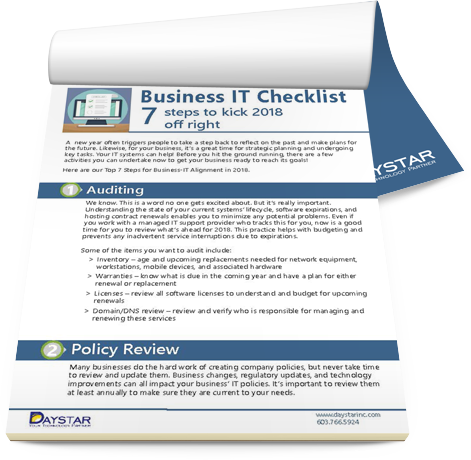
Compare your IT processes to our 225+ point Business Alignment Checklist.
Fast-Growing Boston Technology Companies Set To Join The Largest Ones
1. Klaviyo
Klaviyo offers marketing automation software that helps brands manage customer data and send targeted email and SMS campaigns. Its platform uses a unified customer database so businesses can track behavior, organize audiences, and automate communication from one place. Recent updates add predictive analytics that help companies estimate customer value and plan future marketing efforts.
2. Snyk
Snyk provides a software security platform built for developers, with tools that scan code for risks during the development process. Their technology connects directly with coding environments and development pipelines so teams can find and fix issues earlier in the software lifecycle.
Companies use Snyk’s platform to support secure application development practices, while their internal teams or technology partners handle broader IT operations and ongoing system management.
3. WHOOP
WHOOP develops wearable fitness technology that collects biometric data to help users understand sleep, recovery, and physical strain. Their screenless devices pair with a mobile app that turns health metrics into clear performance insights for athletes and wellness-focused users. The company has expanded into workplace wellness programs and clinical research by using aggregated data to support performance tracking and health studies.
4. Starburst
Starburst builds a data access platform based on the Trino (formerly PrestoSQL) engine that lets organizations query information across different clouds and databases without moving it into one storage system. Large enterprises use this technology to work with data that sits in many locations, which helps control storage costs and supports hybrid cloud strategies.
5. Lightmatter
Lightmatter develops advanced computer hardware that uses photonic chips to run artificial intelligence workloads with light instead of electrical signals. This approach aims to reduce power use and heat while improving processing speed for complex AI calculations.
|
Learn More About Boston’s Technology Sector |
How Do Big Tech Companies in Boston Use IT to Power Their Growth?
1. AI-Native Development & Agentic Workflows
Leading organizations now use AI for more than chatbots. Many teams build agentic AI into their software and daily work. These AI agents can understand goals, write code, and handle system connections with little human input.
As a result, human teams move away from manual coding and describe what they want the system to do instead. This approach helps companies release updates faster and lets skilled engineers spend more time on system design instead of routine tasks.
2. Hybrid & Sovereign Cloud Architectures
Many organizations now follow a “Cloud 3.0” model instead of relying on one public cloud provider. They use a mix of public cloud services, private infrastructure, and regional data centers.
This setup lets companies keep sensitive information in specific locations to meet changing regulations while still using public cloud resources when they need extra computing power. A flexible cloud strategy helps businesses grow in different regions, control costs, and avoid depending on a single vendor.
3. Zero Trust Cybersecurity
Modern business leaders use a zero-trust cybersecurity model to control how people and devices access systems. Every user, device, and connection must prove its identity each time it tries to access data or applications. Access does not rely on location or network alone.
Continuous validation helps companies support remote employees and external partners while limiting unnecessary system access. Currently, among organizations that allow BYOD, 70% of BYOD devices lack proper security protocols, according to CloudSecureTech. A zero-trust model helps you stay in control of your system’s security, even if BYOD devices are inconsistent.
4. Distributed Intelligence
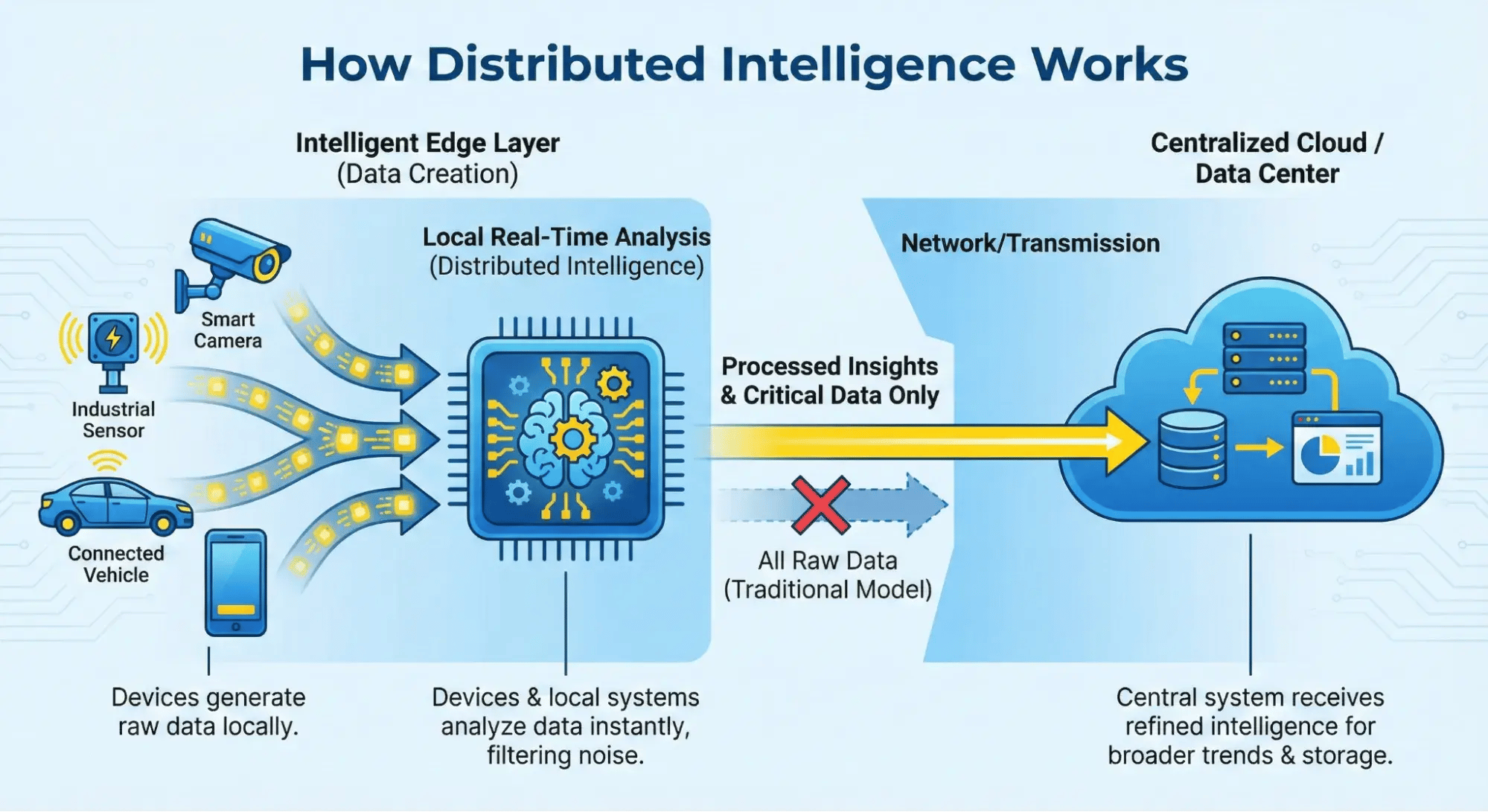
Top organizations use distributed intelligence to process data closer to where it is created instead of sending everything to a central system. Devices and local systems handle part of the analysis in real time.
This approach reduces delays and allows faster responses for connected equipment and live applications. Processing data at different points across the network also lowers bandwidth usage and helps teams act on information right away.
5. Unified Observability
Growth-oriented companies use unified observability platforms to view systems, cloud services, and user devices in one place. These tools collect data from across the environment and use AIOps to connect related events and spot unusual activity that may signal a system issue. Centralized visibility helps IT teams track performance, understand what is happening across systems, and respond to problems faster.
6. Data Mesh
A data mesh approach to manage large amounts of information. Each department treats its data like a product that it owns and maintains. Sales, engineering, and marketing teams manage their own data sets while keeping them available to the rest of the company. This structure helps teams find and use information faster, which supports quicker decisions based on current data.
How You Can Implement IT Strategies From The Largest Tech Companies in Boston to Your Business
|
AI-Native Development & Agentic Workflows |
|
|
Hybrid & Sovereign Cloud Architectures |
|
|
Zero Trust Cybersecurity |
|
|
Distributed Intelligence |
|
|
Unified Observability |
|
|
Data Mesh |
|
Run Your Organization Like The Top Boston Tech Companies With Daystar
Using these tips and tricks is one way to fuel your organization’s growth. Whether you run a tech company or not, there is certainly something you can learn from how top tech companies in Boston use IT to power their businesses.
If you need a hand implementing these best practices, you can count on Daystar. We run a boutique-style managed IT services company, which means that we will find creative ways to help you apply leading IT practices to your unique workflows.
Trust our Boston-based team for:
- IT support
- IT helpdesk services
- Cybersecurity
- IT consulting
- IT network support
- IT outsourcing
- and more!
Contact us to get started!