


As of early 2026, Portsmouth, New Hampshire, has an estimated population of 23,411, which reflects a 1.02% annual growth rate. The city balances its historic maritime identity with a modern economy built on a mix of traditional and emerging Portsmouth industries.
|
“Keeping up with emerging technological trends is only half of the picture. You need to understand how your industry uses it and how it will help you meet your business goals if you want to succeed.” - Mike Ransom, Virtual CIO, Daystar |
New Hampshire’s overall job growth slowed to about 0.6% through the second half of 2025. Yet, Portsmouth continues to avoid this state average due to strong activity in high-value sectors. All of these high-value sectors are finding innovative ways to use new technologies to maintain their positions.
The rest of this article is about those sectors. We will explore 6 of the biggest industries in Portsmouth, 4 growing ones, and how the right managed IT services provider (MSP) can help them all.
The Top 6 Industries in Portsmouth, New Hampshire
1. Healthcare
From August 2024 to August 2025, the healthcare sector in New Hampshire was the only major private industry with steady employment growth as 2026 approached. During this period, the industry added 2,600 jobs. In Portsmouth, regional medical hubs and specialized outpatient facilities support this growth and serve the aging Seacoast population.
2. Advanced Manufacturing
Portsmouth’s manufacturing base is shifting toward high-skill, higher-wage production. Many companies at Pease International Tradeport produce aerospace and medical device components.
In early 2025, the state lost 1,371 manufacturing jobs, but, at the same time, the average weekly wage for remaining positions rose by $153. This change suggests firms are reducing lower-wage roles and hiring more skilled technical talent.
3. Tourism & Hospitality
The arts, entertainment, and recreation industry grew by 11.1% in the first quarter of 2025. As of early 2026, Portsmouth’s downtown supports this growth through strong visitor spending and expanded seasonal and year-round hospitality offerings.
4. Real Estate
Portsmouth remains a premium coastal destination with strong real estate activity. By December 2025, home transaction volume increased by 35% compared to the previous year. Demand remains high even with a median sale price of $875,000 as of late 2025.
5. Finance & Insurance
Portsmouth serves as a regional center for financial services, including asset management and corporate accounting. This concentration of firms supports steady activity in the sector. Employment data reflects this strength. Financial activities in New Hampshire grew by 2.1% year-over-year as of early 2026, which exceeded the national average for the same period.
6. Retail
Portsmouth attracts shoppers because New Hampshire has no sales tax. This steady visitor traffic keeps stores busy and encourages retailers to keep locations in the city. Low vacancy rates support this point. By the end of 2025, the national retail vacancy rate was 5.7%, which is historically low. When vacancy rates stay low, most retail spaces remain occupied.
Why Does Daystar Have a 96.9% Satisfaction Rating?
4 Growing Portsmouth Industries You Should Keep an Eye On
1. Biotechnology
New Hampshire’s biotech sector has grown by 7% each year since 2019. As of 2026, more than 11,000 people work in the field statewide. Portsmouth benefits from this growth as many biotech companies expand outside the Boston area into neighboring states. Biotech firms look to New Hampshire for its favorable regulations.
2. Construction
Construction companies rank among the fastest-growing private businesses in the region. In a late 2025 assessment, construction firms accounted for 45% of the 20 fastest-growing companies in New Hampshire.
Infrastructure projects and commercial redevelopment support this growth. In the Seacoast office market during 2025 and 2026, developers have begun repurposing older commercial spaces as part of a broader rightsizing trend.
3. Renewable Energy
Portsmouth sits near the center of a shift in New Hampshire energy policy. In August 2025, the state passed House Bill 504 to remove barriers to energy innovation. Energy demand has begun to reflect this change. Retail electricity demand increased by 2% year-over-year in 2025.
This growth has encouraged investment in local grid upgrades and alternative electricity providers that operate outside traditional public utility regulation.
4. Aerospace & Defense
The global aerospace and defense market is expected to reach $1.047 trillion by the end of 2026, with an annual growth rate of 8.5%. Portsmouth companies are positioning themselves within this expanding market. Many firms now focus on advanced military capabilities and space-based defense systems.
|
Learn More About How Your New England-Based Business Can Use Technology |
What Top Portsmouth Industries Must Remember About Technology
1. Integration of Agentic AI in Operations
Portsmouth businesses across many industries are facing a tightening labor market. Companies are looking for ways to maintain productivity with fewer available workers. Many of these investments focus on agentic AI. These systems can manage supply chain disruptions and coordinate operational tasks such as shift handovers without direct human oversight.
2. Cybersecurity as a Governance Priority
Entering 2026, cybersecurity has moved from an internal IT function to a board-level priority for many Portsmouth organizations. Leadership teams now treat digital risk management as a core business responsibility. Strong protection for company systems and sensitive information has become essential as data regulations tighten.
3. The Workforce Skills Gap
Portsmouth businesses must rely more on technology as workforce shortages grow. A 2025 workforce assessment projects a gap of 191,000 jobs in New Hampshire by 2032 that natural labor force growth cannot fill. Companies also report difficulty finding workers with the right skills. About 87% of businesses report a technology skills gap.
Many organizations now turn to automation to maintain operations. As a result, the use of AI technologies is expected to double by the end of 2026 due to the current disconnect between needed skills and the skills available from potential employees on the job market.
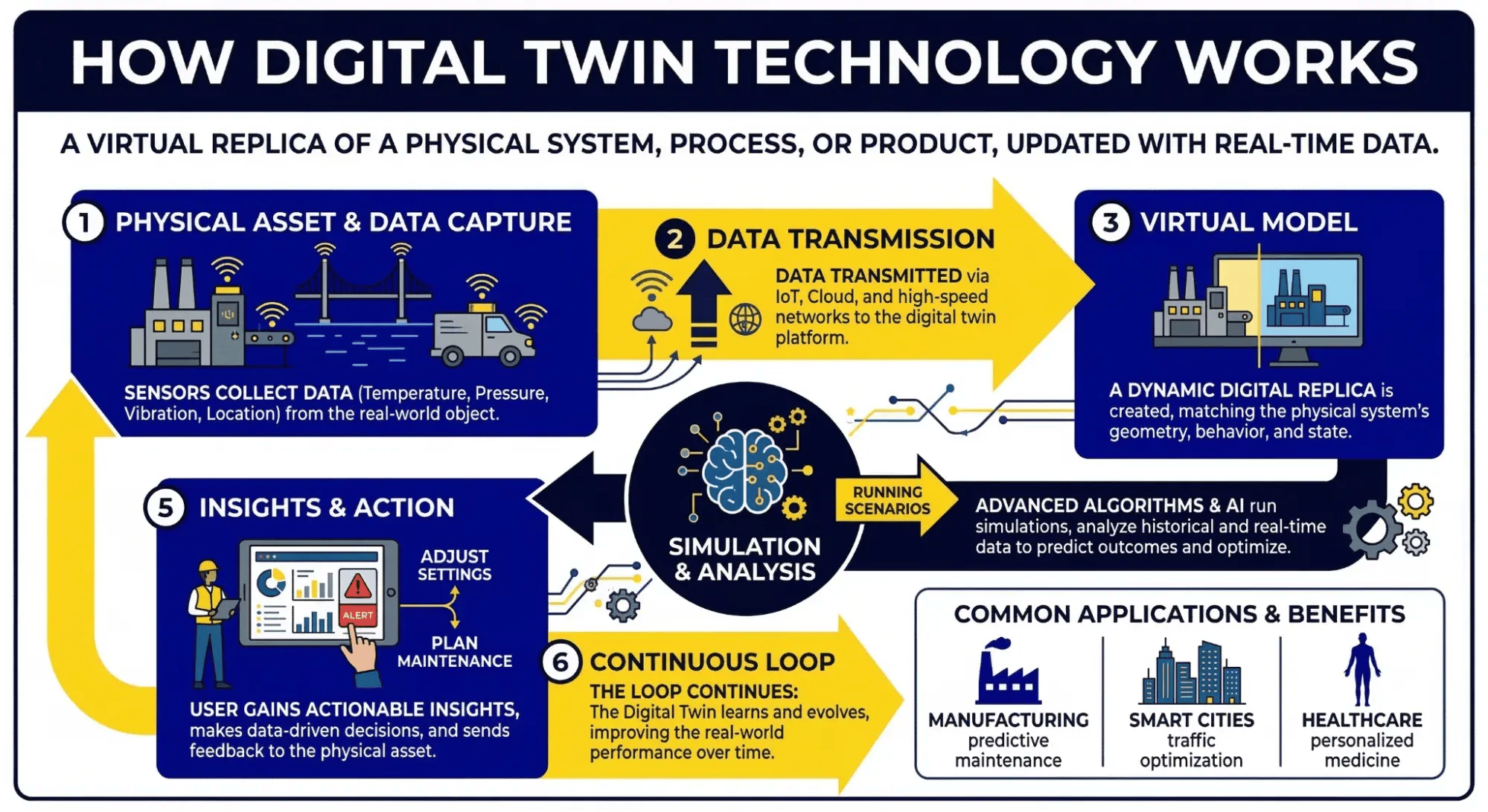
4. Digital Twins
Industrial space in New Hampshire remains limited. In the past 12 months, vacancy for properties increased by only 1.6%, and no new industrial capacity was added. Because space is scarce, many organizations must make better use of the facilities they already have. Companies now focus on improving layouts, equipment use, and workflow inside existing buildings using digital twin technologies.
How The Right Managed IT Partner Can Help All Industries in Portsmouth, NH
|
Healthcare |
|
|
Advanced Manufacturing |
|
|
Tourism & Hospitality |
|
|
Real Estate |
|
|
Finance & Insurance |
|
|
Retail |
|
|
Biotechnology |
|
|
Construction |
|
|
Renewable Energy |
|
|
Aerospace & Defense |
|
Choose a Portsmouth IT Partner That Helps All Portsmouth Industries
If you’re in any one of these Portsmouth industries, or another, the best IT partner for you is one that also works in the area. Such a partner is well-equipped to handle your specific needs and is ready to grow alongside you in the local market.
That partner is Daystar. Our team operates throughout New England, and we have a strong presence in Portsmouth. You can trust our experts for:
- IT support
- IT helpdesk services
- IT consulting
- Cybersecurity services
- IT network support
- IT outsourcing
- and more!
Contact us today to get started!